Blog · November 3, 2026 · 5 min read
1,250 games, tagged by art style: what the numbers show
We tagged 1,250 popular PC and mobile games by how they look. Realism leads, outlines are rare, and 2D games score higher on Steam.

StyleDex tags every game in its catalog by how it looks: how it's rendered, its palette, its lighting, its mood, its camera and 14 other kinds of tag. That's 1,250 games so far, the 1,000 most-reviewed games on Steam plus 250 of the biggest App Store and Google Play games, with 26 tags each on average.
Seven patterns stand out. The biggest: on Steam, 2D games score about seven points higher than 3D games.
1. Most games are 3D, and half aim for realism
Seven in ten games in the dex are 3D. On Steam alone, it's closer to eight in ten.
Almost exactly half of all games (624) are realistic 3D, with real-world proportions and materials and lighting that try to behave like the real thing. Within that group, 69 go all the way to photoreal, where the aim is to look like film footage, as in Red Dead Redemption 2 and Black Myth: Wukong.


2. Four in five games have no outlines
82% of games have no outlines at all. Only 54 use thick outlines, and most of those are 2D.
Two well-known examples of the ones that do: Hollow Knight inks its bugs in fine dark lines over glowing backgrounds, and Cuphead copies the hand-inked look of 1930s cartoons.


3. 2D games score higher on Steam
Among the 1,000 Steam games, 2D games average a 90.7% review score and 3D games average 83.4%. Broken down by art style, the hand-made and stylized looks score highest, and realistic 3D and photoreal games score lowest.
The axis starts at 70%. Review score is Steam's positive share, adjusted toward 50% for games with fewer reviews. Steam games only, so phone store ratings don't skew it. A game counts in every style it carries.
Don't read this as "pixel art makes a game good". The dex holds Steam's most-reviewed games. A small 2D game usually needs players to love it to collect that many reviews, while a big realistic release can get there with a large launch and mixed reviews. Several of the lowest-scoring photoreal games are big online shooters like Call of Duty and Battlefield 2042, a genre where reviews swing with every update.
So the gap says as much about which games reach the list as about art style. What it does show is that, among popular Steam games, the realistic ones don't score better on average.
4. Hidden gems are mostly 2D
StyleDex sorts every game into a tier from its review count and score. A hidden gem is a game in the top fifth for review score but the bottom half of the dex for review count.
Nearly half of the hidden gems are 2D. Among the big hits, it's about one in nine.
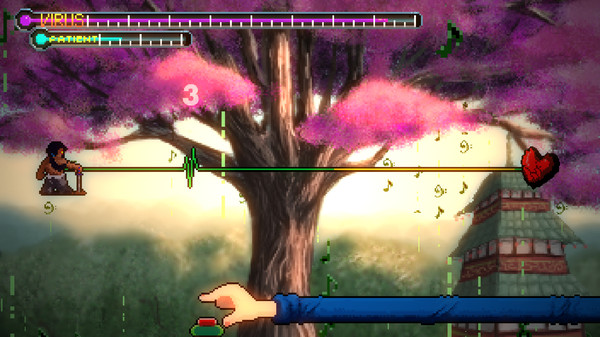
A quarter of hidden gems are pixel art, compared with about 5% of hits. This partly follows from the same effect as above: a high score with fewer reviews is exactly where well-loved small 2D games land. These four are all hidden gems with review scores above 95%:





5. Phone games are brighter and more cheerful
The 250 mobile games in the dex look very different from the Steam ones. They're far more often 2D, saturated and cheerful, and far less often dark or tense.
| Steam | Mobile | |
|---|---|---|
| Cheerful mood | 11% | 56% |
| Tense mood | 37% | 12% |
| Saturated palette | 32% | 68% |
| Dark palette | 35% | 12% |
| 2D | 17% | 42% |
| Realistic proportions | 48% | 15% |
Some of this is the screen: bright colors and big, simple shapes are easier to read on a phone. Some is the genre mix, since the biggest phone games are puzzle, match-3 and casual strategy games made for a broad audience. And some may come from how we tag: phone games were tagged from their store screenshots, which are often bright, ad-style images with text on them. The dex tags the shared look as mobile casual gloss, found on 84 games, 80 of them mobile.


6. Photoreal arrived, and stylized 3D is growing
Splitting the Steam games by release year shows two trends running at once.
Photoreal games went from none in the dex before 2013 to about one in ten from 2018 on. Over the same years, stylized 3D, meaning 3D that looks painted, chunky or cartoony on purpose, nearly doubled its share. Realistic 3D as a whole, photoreal included, is what's shrinking: from 72% of games released before 2013 to 57% of games released since 2022.
7. Cozy games score highest
Of all the moods in the taxonomy, cozy games have the highest average Steam review score, 91.1%, led by games like Stardew Valley and Spiritfarer. Tense games, the most common mood on Steam, average 82.2%. The same selection effect applies here.


How we tag
- Which games: the 1,000 most-reviewed games on Steam (adult games and non-game software left out) and 250 top App Store and Google Play games.
- How: each game was tagged from its store screenshots by an AI model working through a fixed list of 512 tags in 19 groups, with a confidence score per tag. Style tags below 50% confidence are dropped. Every tag on the site has a "wrong tag?" button, and flags go to a review queue.
- Counts: a game counts toward a tag if it has that tag or any style under it. For example, a game tagged 16-bit pixel art also counts as pixel art.
- Review scores: Steam's positive share, pulled toward 50% for games with fewer reviews, so a game with a few hundred glowing reviews doesn't outrank one with a hundred thousand good ones.
Every tag named in this post links to its page, where you can browse the games behind the number. You can also combine any two tags, like pixel art with a dark palette, to dig further.